

Silicon Valley AI Film Festival Launches Boston Regional Division, Connecting AI, Cinema, and Cross-Cultural Creativity
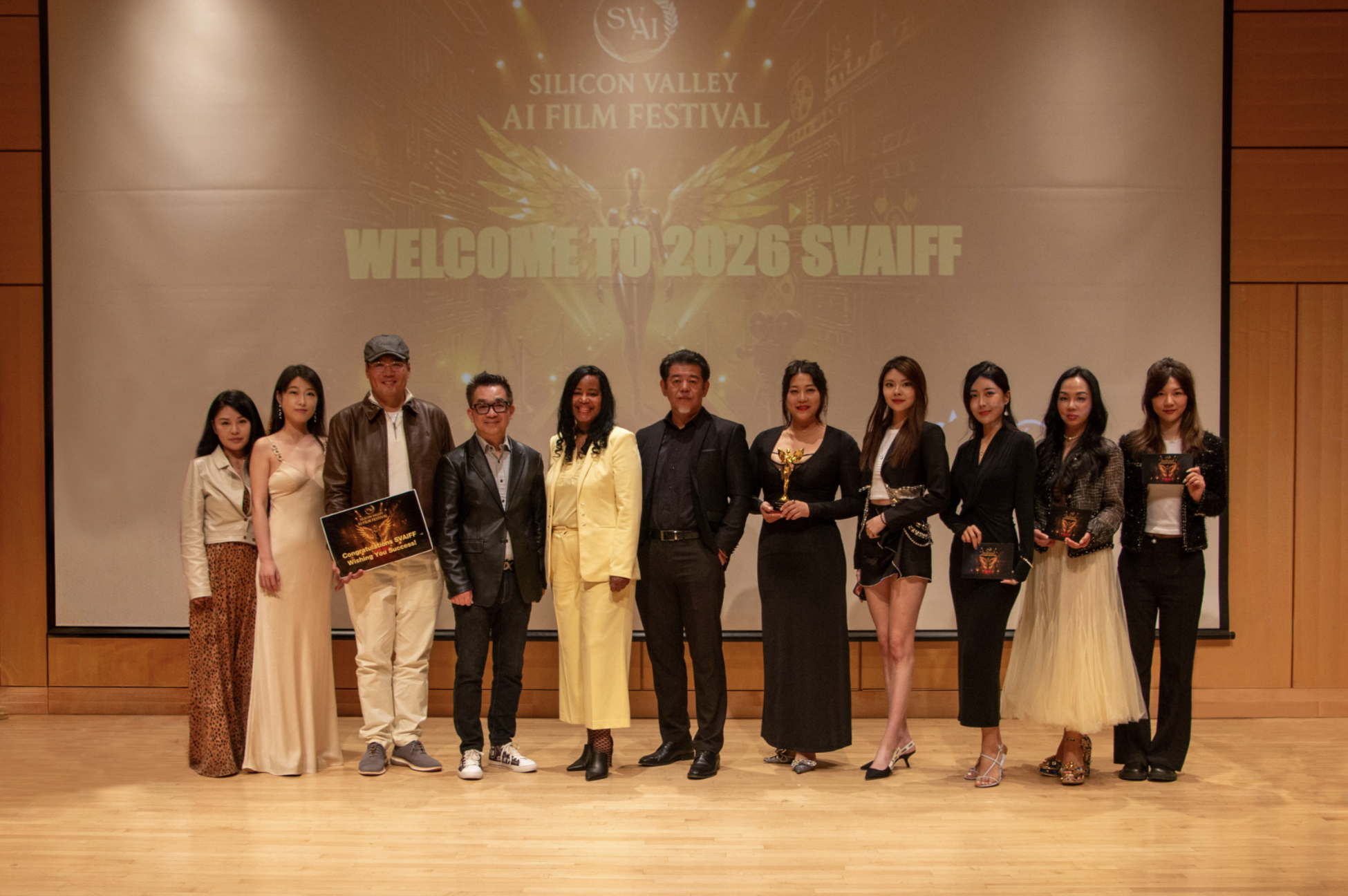
The event marked an important step in the festival’s continued expansion beyond Silicon Valley. Following its inaugural program in San Jose and a subsequent event in Los Angeles, SCAIFF Boston introduced the festival’s vision to one of the nation’s leading centers for education, technology, research, and cultural diversity. With Boston’s strong academic ecosystem and growing creative technology community, the city offered a fitting stage for conversations about how artificial intelligence is reshaping cinema, media, and artistic expression.
The Los Angeles launch was previously announced through an official press release, which is available here: Silicon Valley AI Film Festival Launches in Los Angeles, Bringing AI Filmmaking into the Global Spotlight. The Boston program builds on that momentum while extending the festival’s regional presence on the East Coast.
SCAIFF, the Silicon Valley AI Film Festival, is an international platform dedicated to the deep integration of artificial intelligence and filmmaking. The festival aims to connect filmmakers, technology innovators, investors, educational institutions, cultural organizations, and creative communities, while exploring new possibilities for cinematic storytelling in the AI era. At its core, the Boston launch was not only a press conference but also a statement about where the future of film may be heading.
The afternoon opened with a literary and cultural prelude featuring two distinguished Chinese-language writers, Lu Xinhua and Bing He, who appeared as special guests of the festival. Lu Xinhua, widely known as one of the pioneers of China’s “Scar Literature,” joined the event with his latest novel Wulou, a work spanning more than half a century and reflecting on history, memory, time, and humanity. Bing He, a cross-disciplinary creator whose work bridges literature and AI visual storytelling, presented AI Apocalypse, a future-oriented work exploring the relationship between human experience and technology.
Although the opening portion included a new book launch and author dialogue, its larger significance was closely connected to the film festival itself. The conversation placed literature, human memory, and AI-generated visual media within the same creative framework, offering a thoughtful opening for the SCAIFF Boston program. Through the presence of Lu Xinhua and Bing He, the event emphasized that AI cinema is not only a technological development, but also a continuation of storytelling traditions shaped by writers, artists, and human experience.
At 3:30 p.m., the program formally transitioned into the SCAIFF Boston Press Conference. The shift from literary discussion to the film festival launch felt natural, as both parts of the afternoon explored the same central questions: how do humans create in an age of artificial intelligence, how is storytelling being redefined, and what new forms of collaboration may emerge between artists and technology?
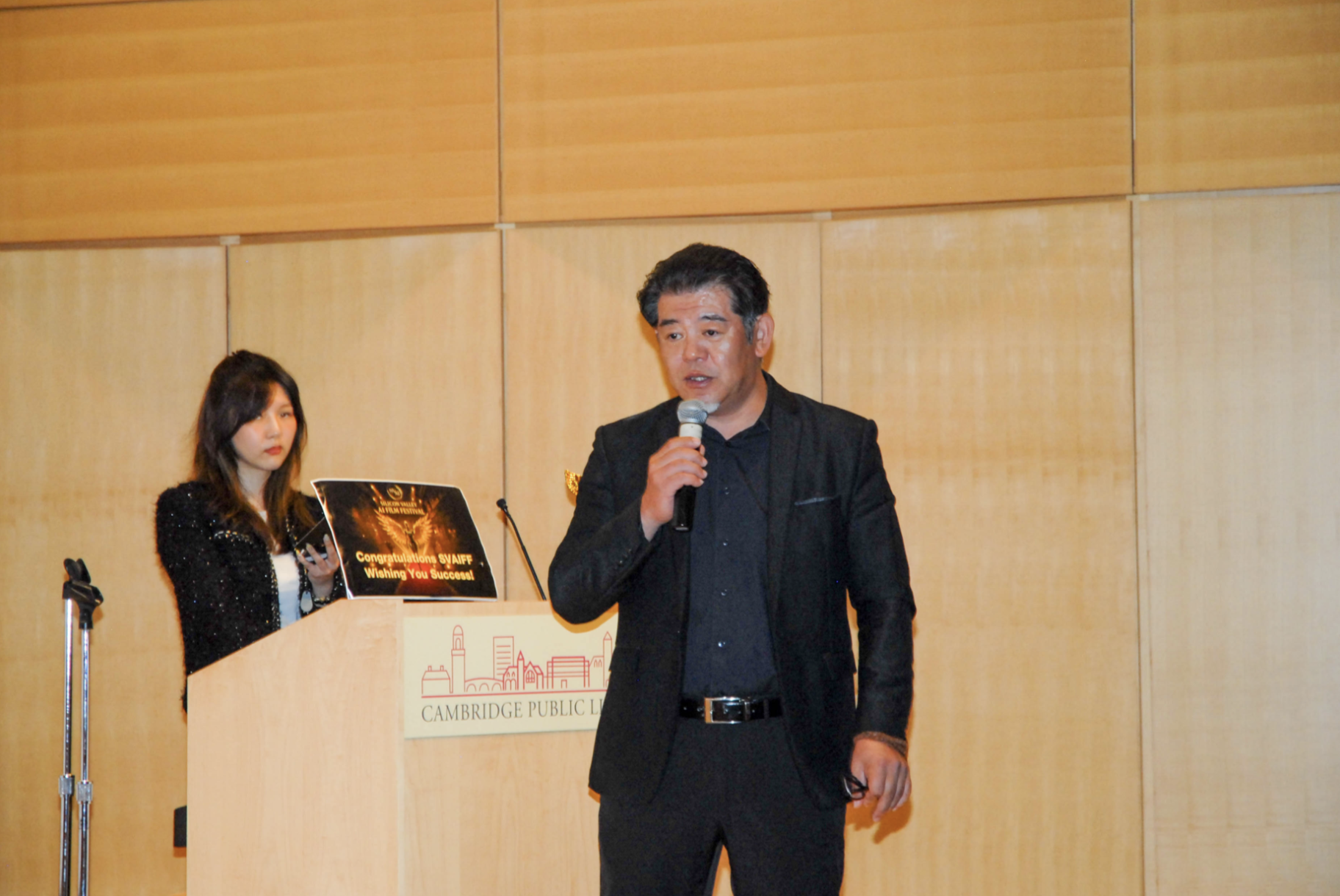
The press conference opened with a bilingual welcome to distinguished guests, members of the press, and representatives from the film, technology, arts, and cultural communities. The host introduced SCAIFF as a platform committed to connecting AI and filmmaking, while also highlighting Boston’s unique position as a city known for world-class universities, a vibrant innovation ecosystem, and a diverse cultural community.
Organizer remarks set the tone for the official launch. Sing Chang, Founder and Chairman of the Global Organizing Committee of the Silicon Valley AI Film Festival and Founder of Star Alliance Culture Inc., was invited to speak about SCAIFF’s global development and its continued expansion into new cities. His remarks positioned the Boston regional program as part of a broader effort to build an international network for AI cinema and creative technology.
The program also included remarks connected to the Boston regional team and MovieFlow. Bing He, appearing as a representative of MovieFlow, underscored the relationship between AI tools, creative platforms, and new filmmaking workflows. His role further connected the afternoon’s literary opening with the festival’s larger focus on AI-assisted storytelling, demonstrating how writers and creators can move across media forms in the digital age.
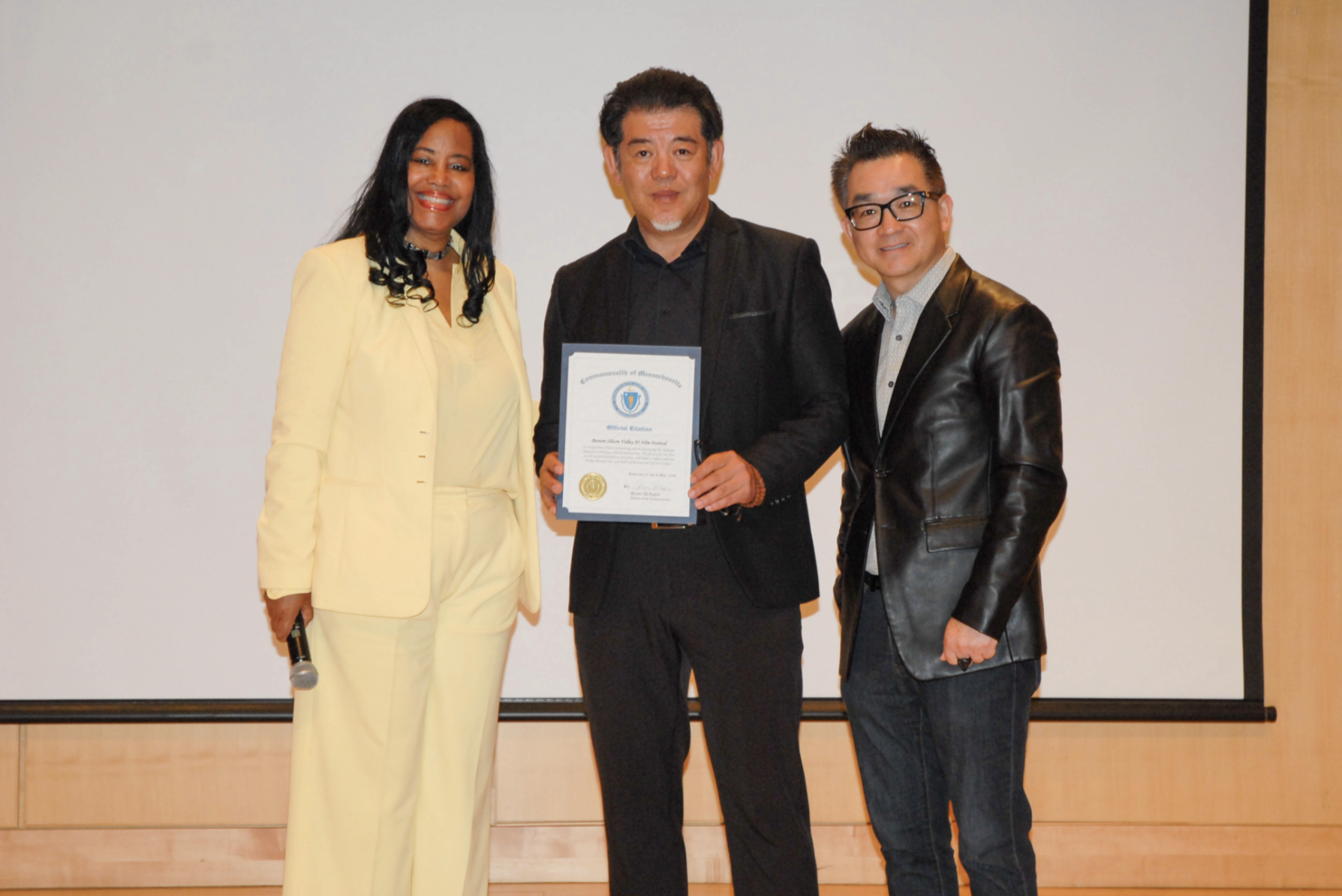
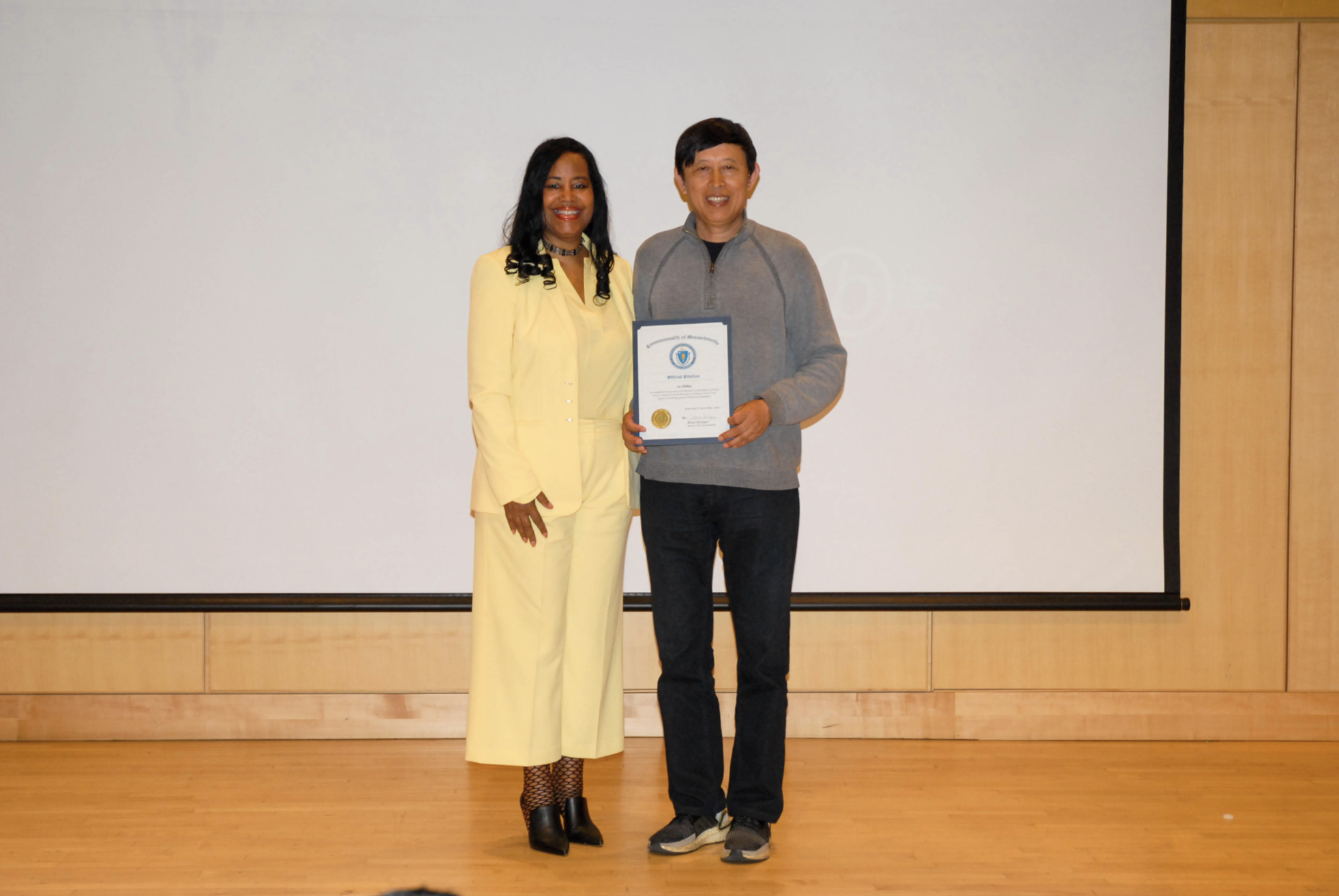
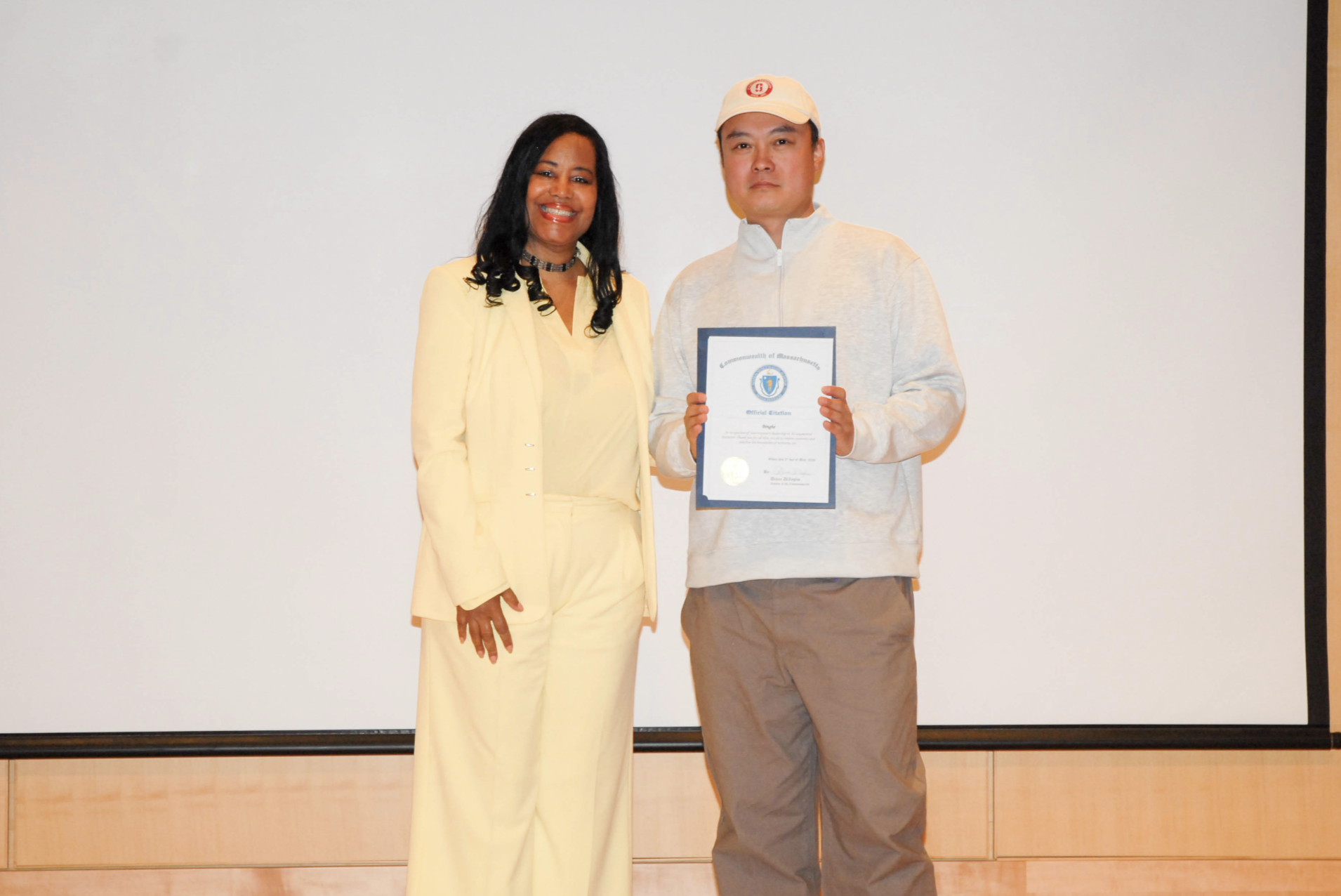
Alda Witherspoon, Arts & Cultural Advisor for the Commonwealth of Massachusetts, was invited to deliver remarks, highlighting the event’s cultural and civic dimension. Her presence reflected the importance of arts, public culture, community development, and cross-cultural exchange in discussions about emerging creative technologies. The program also included an award presentation recognizing meaningful contributions to artistic innovation, technological exploration, and cultural connection.
Professor Zheng Yi, a tenured professor at Northeastern University and a Board Member of the Boston Cultural Council Advisory Board appointed by the Mayor’s Office of Arts and Culture, also delivered remarks. His participation connected the festival to Boston’s academic and public cultural landscape, reinforcing the city’s role as a place where education, technology, policy, and the arts frequently intersect.
The conference then turned toward creators and emerging voices. Vanessa Lu, representing the director group, was invited to share insights from the perspective of filmmakers working with AI, including the practices, challenges, and opportunities emerging in AI filmmaking. The program also featured remarks from representatives including Alice Zhou, a neuroscientist at Harvard Medical School, and Iris Bai Yue, Event Director, who brought perspectives from science, event leadership, branding, and the next generation of creative communities.
The event concluded with a guest Q&A session, allowing members of the press and audience to raise questions about AI filmmaking, creative practice, industry collaboration, and cultural exchange in Boston. This final segment reinforced the purpose of the launch: to introduce SCAIFF Boston not simply as a festival program, but as a platform for ongoing dialogue among artists, technologists, institutions, and audiences.
Taken together, the May 2 gathering at Cambridge Public Library marked the formal beginning of the SCAIFF Boston regional program and positioned the city as an important site for the future of AI cinema. By bringing together established literary figures, AI creators, filmmakers, scholars, cultural advisors, and young representatives, the event demonstrated the festival’s cross-disciplinary ambition.
As artificial intelligence continues to transform the ways images are produced, edited, distributed, and understood, SCAIFF Boston arrives at a timely moment. The launch suggested that the future of cinema will not be shaped by technology alone, but by the human questions, cultural memories, and creative visions that artists bring into conversation with new tools.
With its Boston regional division now underway, the Silicon Valley AI Film Festival is expanding its mission from the heart of Silicon Valley to one of America’s most intellectually and culturally dynamic cities. The May 2 launch offered a clear message: AI filmmaking is not just a technical frontier. It is an emerging cultural movement, one that invites filmmakers, writers, technologists, and audiences to imagine what storytelling can become in a rapidly changing world.
Submissions are now open for the Boston Division of the Silicon Valley AI Film Festival (SVAIFF). AI filmmakers, directors, producers, student teams, and creative organizations are welcome to submit their works for consideration and presentation in the Boston Division. The Boston Division is currently accepting submissions through May 30. For submissions and more information, please visit: svaiff.com. Please indicate or select “Boston Division” when submitting your application.
The festival’s regional expansion will continue with a New York Division press conference scheduled for May 30, further strengthening SVAIFF’s growing network across major U.S. creative and technology hubs.
BIMC
Boston International Media Consulting
email us here
Legal Disclaimer:
EIN Presswire provides this news content "as is" without warranty of any kind. We do not accept any responsibility or liability for the accuracy, content, images, videos, licenses, completeness, legality, or reliability of the information contained in this article. If you have any complaints or copyright issues related to this article, kindly contact the author above.
